about
Rules and Regulations to Be Followed to Land a Helicopter in a Skyscraper: FAA Guidelines, Rooftop Helipad Standards & City Permitting Explained
Posted on bySchweizer Team
- August 12th, 2025
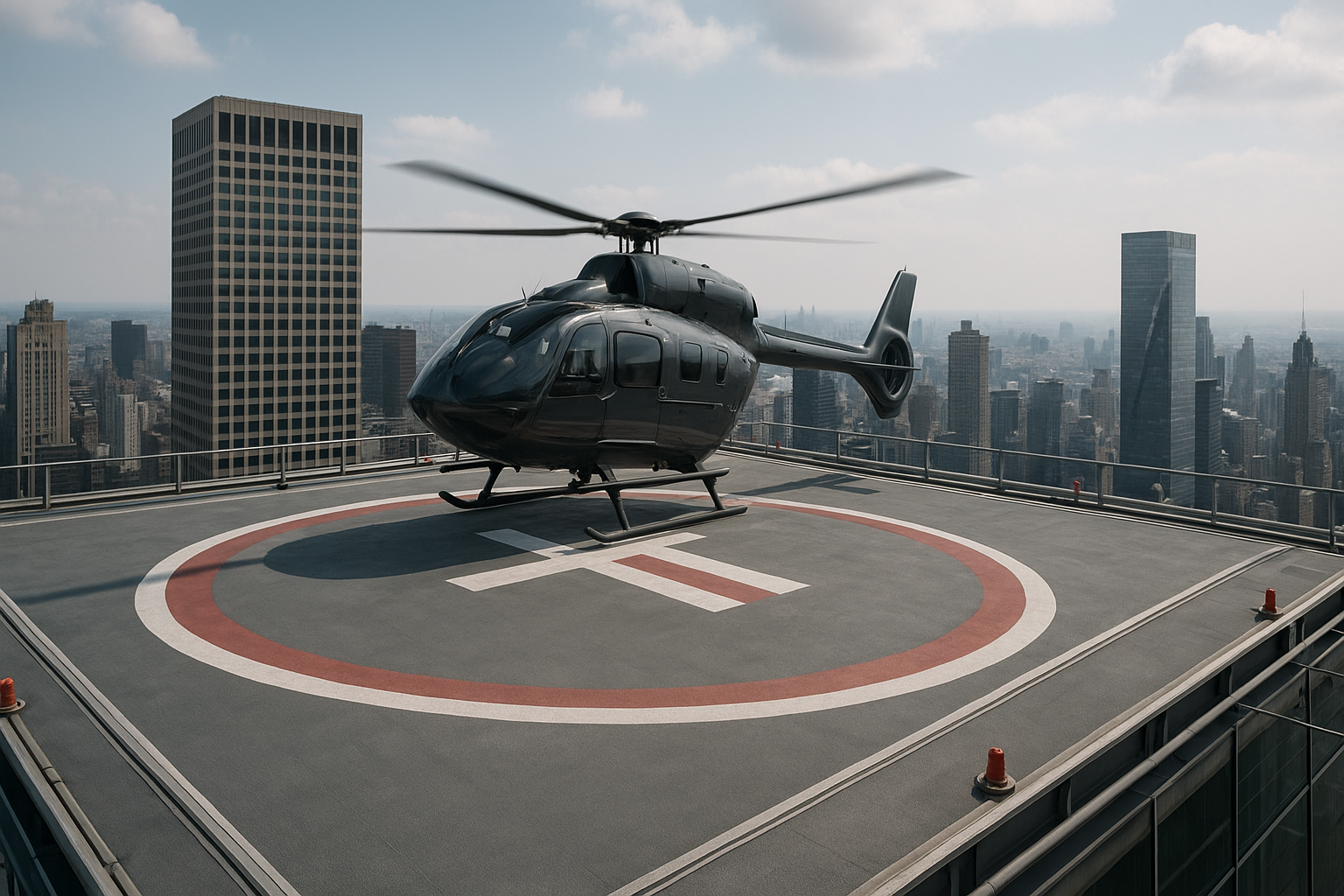
Landing your helicopter on a skyscraper may sound like a picture-perfect moment right out of your favorite action flick, but in reality, it’s way more complicated. Before you think about landing your rotorcraft on a rooftop helipad, you have to know about the various FAA guidelines, restrictions, and know-hows.
Whether you’re travelling for executive purposes or need to perfect emergency rooftop landings, this blog dives deeper into the various rules, regulations, city permits, and guidelines mandated by the FAA for landing your helicopter on a skyscraper to keep your thrill in safe and legal limits.
UAM (Urban Air Mobility) is evolving at a swift pace – and that’s where these regulations matter even more. Take a look –
FAA Guidelines for Helicopter Landings in Urban Areas
Landing helicopters in urban areas is a challenge, especially with the ever-increasing urban congestion and tightening regulations on urban air mobility.
The FAA mandates certain guidelines to ensure helicopter landings are in accordance with legal standards and flying norms for the safety of the helicopter, pilot, passengers, and urban spaces.
In general, the FAA governs each and every helicopter operation under 14 CFR Part 91 (General Operating and Flight Rules), and the following subparts that redefine how helicopters are operated and landed in urban areas –
- 14 CFR Part 41: General operating and flight rules
- 14 CFR Part 135: Charter and commuter operations for commercial helicopters
- 14 CFR Part 157: Notice of construction and alteration of landing areas/heliports
Helicopter landings in urban zones fall under two designated categories –
- Designated Landing Areas or certified helipads and heliports that are approved by the FAA, which may be located on-ground, on rooftops, or over water and follow FAA-mandated safety standards.
- Off-heliport Landing Areas that are within the minimum safe altitude and must be pre-approved unless the landing is an emergency.
For helicopter landings in urban areas, especially skyscraper rooftops, the pilots must hold a valid rotorcraft helicopter rating with a preferred commercial or ATP certificate.
Additionally, the pilot is highly responsible for maintaining FAA guidelines by coordinating with the ATC for landing and airspace clearance, especially if the skyscraper is near major airports or within Class B/C/D airspace.
Rooftop Helipad Designs and Construction Standards
While constructing your rooftop helipad or considering landing your helicopter on a skyscraper roof, it is absolutely essential to keep design and construction standards in mind.
The Federal Aviation Academy (FAA) specified Heliport Design guidelines under AC 150/5390-2D –
- Specifies guidelines and requirements for Touchdown and Lift-off Area as well as Final Approach and Take-off Area.
- Mandates sizing on the basis of helicopter diameter and width, with load-bearing capacity to be taken into consideration.
- For emergency landings on rooftops or skyscrapers, state and local building code requirements are to be followed with appropriate safety areas and nets.
Similarly, the FAA specifies appropriate conditions such as lighting for night operations, compliance with NFPA 418 (fire safety requirements), appropriate markings and an 8:1 approach/departure slope free from any obstruction.
Additionally, rooftop helipads must include safe elevator or stair access and align with the building’s emergency evacuation plans.
City and Local Permitting Requirements
It is not only the Federal Aviation Academy that designates laws for constructing and landing on helipads, but also the city and local government that issue various permits and regulations on the basis of the urban spaces.
In many cities, zonal laws classify heliports as special-use structures that must be in compliance with local building codes, fire safety measures, and noise ordinances. For example, in New York post-1977, all rooftop helicopter landings have been prohibited except in emergency situations. On the contrary, cities like Los Angeles have less restrictive laws for helipad landings on skyscrapers.
Before constructing a heliport or helipad on your rooftop, it is mandatory to obtain a local building permit, the FAA Form 7480-1 for heliports, environment impact, and fire department approvals.
Insurance and Liability Considerations
Keep in mind that having insurance for your helicopter is mandatory, particularly if you plan to rooftop landings. Be it for an executive purposes or emergency rooftop landing, making a skyscraper landing involves some risks. This is the reason why having insurance is paramount!
- Helicopter operators must carry hull insurance as well as aviation liability insurance.
- Building owners and helipad contractors should also be covered.
- Some cities require insurance before they approve permits
Common Challenges and Compliance Mistakes
Navigating through legal procedures for helicopter landings can be perplexing, especially if it involves skyscraper or rooftop helipads or heliports. Don’t be a rookie and avoid these common challenges and compliance mistakes to make your landing as smooth as your take-off.
- Avoid making any landings (unless an emergency) without FAA clearance or ATC coordination.
- Do not use non-certified, unregistered, or non-licensed helipads on skyscrapers.
- Do not fail to keep up to date and maintain all necessary fire safety requirements.
- Avoid ignoring wind studies and be vigilant about any unforeseen path obstructions.
- Failure to ensure adequate insurance policies and liability coverages for your helicopter and helipad.
Skyscraper Helicopter Landing FAQs
Is it possible for a private pilot to land a helicopter on a skyscraper?
Yes, it is possible. With prior approval, a valid pilot license, and a registered helipad, private pilots can land helicopters on skyscraper rooftops. However, having adequate clearance from the ATC and FAA is mandatory.
What are the structural requirements for constructing a heliport on skyscrapers?
The FAA mandates certain guidelines for the design and structure of heliports and helipads on rooftops, especially skyscrapers. Potential constructors are recommended to go through AC 150/5390-2D of the FAA for appropriate guidelines for structural design of helipads including supporting rotorcraft loads, fire safety guidelines, clear safety zones, proper markings and wind indicators.
What insurance is required for skyscraper helicopter landings?
Insuring your helicopter is essential whether it is for skyscraper landings or on-ground landings. It is recommended to get both a hull insurance to cover physical damage as well as liability insurance to cover damages to the helipad, passengers or any third party. Additionally, workers’ compensation is also recommended.
Fly High, Land Safe by Following Helicopter Skyscraper Landing Rules
Today, owning a helicopter is not just about making a financial investment but also about safe integration with urban spaces. It is ideal to be up-to-date and thorough with all legal procedures and in compliance with FAA guidelines, city regulations, and insurance policies for a landing that is safe, appropriate, and legal.
Are you looking to build your own rooftop heliport or safely land your rotorcraft on skyscrapers? Contact our aviation consultants for expert guidance and legal tips to navigate the process.
Looking to build or operate a rooftop helipad? Reach out to our aviation consultants for expert advice and regulatory navigation.